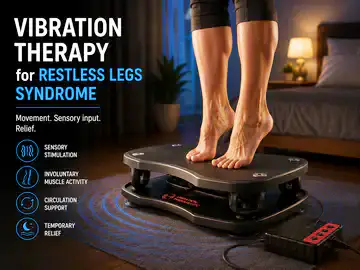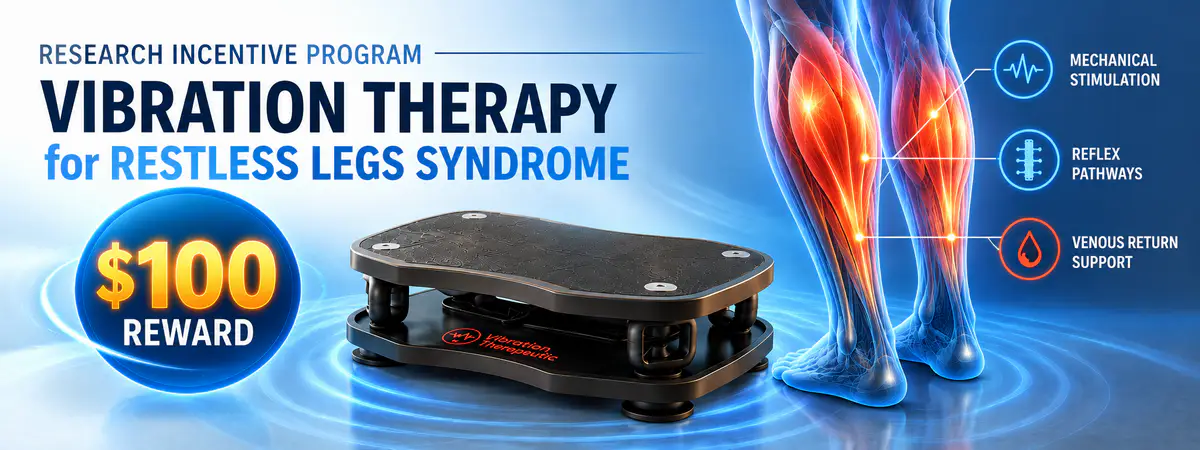
Vibraton Therapy Research Incentive Program for Restless Legs Syndrome
Vibration therapy has been used as a practical approach by some Restless Legs Syndrome (RLS) patients and practitioners, even though its mechanism is not fully understood.
Many users of the VT007 vibration plate report meaningful relief of RLS symptoms after performing calf raise, calf stretch, squat, or hamstring stretch on the vibration plate before bedtime.
Although scientists have proposed many hypotheses, the underlying cause of RLS is largely unknown.
We launched this Research Incentive Program to encourage people with RLS to systematically try vibration therapy and share their experience and results, with the goal of identifying effective treatment modalities.
Page Content Index
- Treatment Modality
- Participation & Registration
- Implementation
- Deliverables & Incentive
- Scientific Rationale
- Supporting Clinical Research
- Why Clinical Trials are Difficult
- From Invidual Experience to Potential Solution
Treatment Modality
The treatment modality of using vibration intervention for RLS involves vibration motion profile, the exercise protocol, and their combination.
| Vibration Motion Profile | Motion pattern, frequency and amplitude |
| Exercise Protocol | Exercise type, pose, duration and routine |
The objective is to identify potentially effective modalities for addressing RLS.
Equipment Selection
We offer two types of vibration plates:
| Linear Vibration Model VT007 / VT009 |
Pivotal Oscillation Model VT027 |
|---|---|
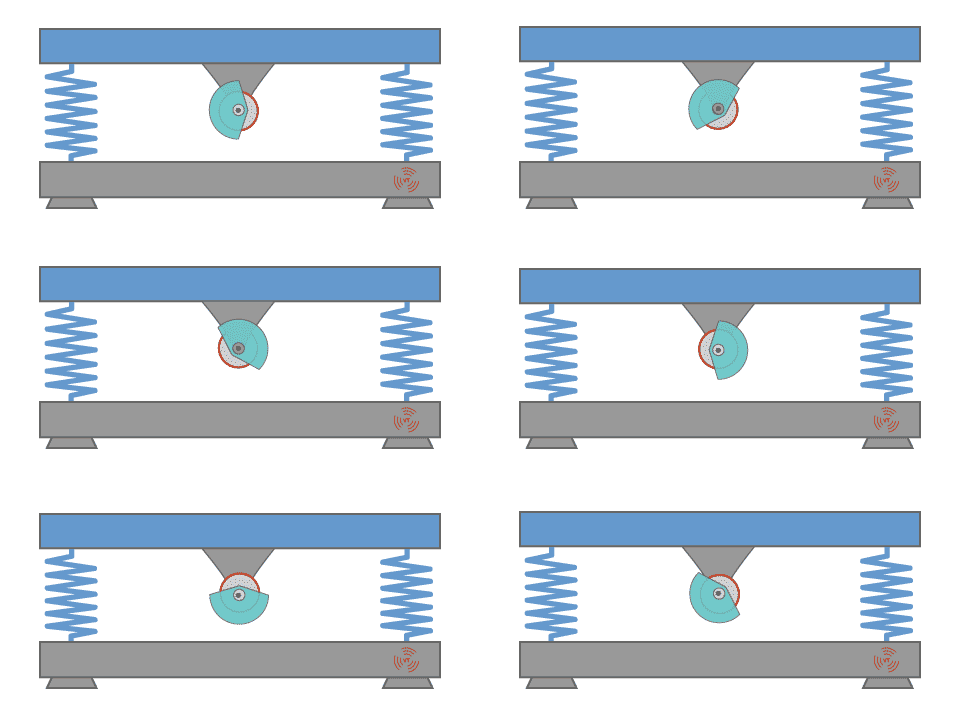 Frequency: 10-40Hz
Amplitude: 0.7-3mm |
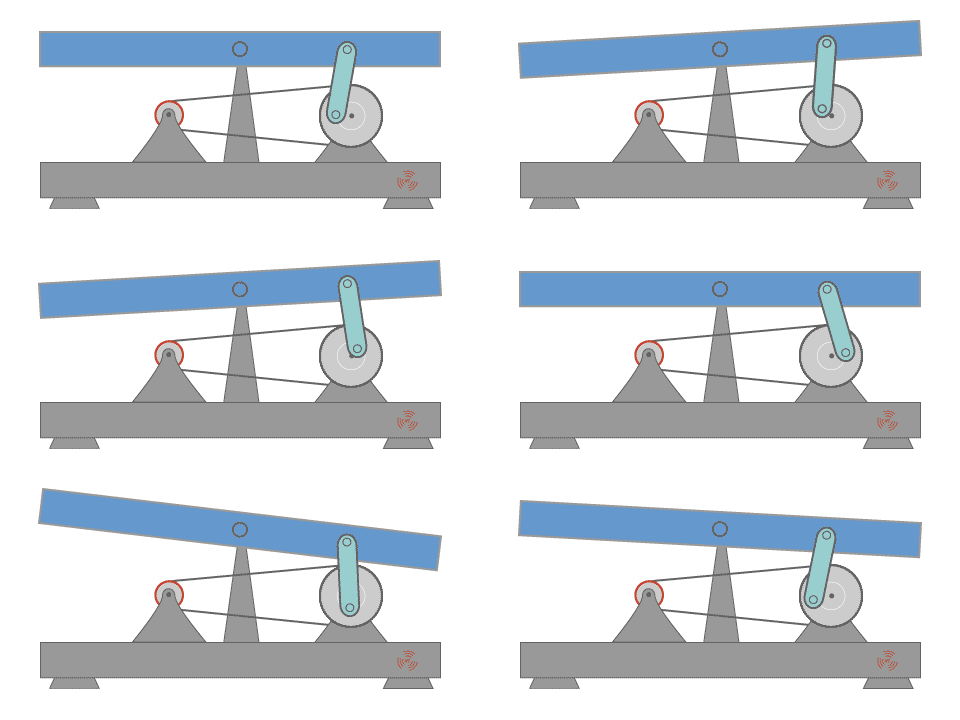 Frequency: 5-14Hz
Amplitude: 10mm |
These two types of vibration plates have distinct motion profiles, which can produce different physical and physiological effects on the human body.
Based on user experience and our independent studies, we recommend the VT007 linear vibration plate at 30 Hz as the starting configuration for this research incentive program.
Exercise Protocol
Calf raise, calf stretch, hamstring stretch and hip-flexor stretch have been reported to help relieve RLS symptoms. Incorporating vibration into these exercises may further enhance their effectiveness.
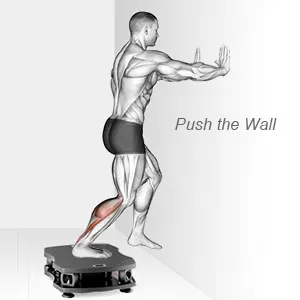
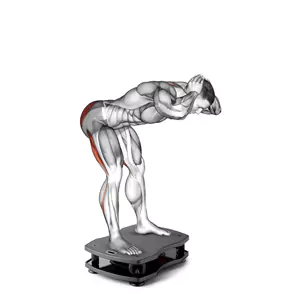
A 10- to 20-minute daily exercise session before bedtime is recommended.
Disclaimer
Vibration Therapeutic is not a healthcare provider or medical institution.
Our products, statements, and recommendations have not been reviewed, approved, or endorsed by healthcare professionals, institutions, or regulatory authorities. Vibration may have adverse effects on your body.
Our vibration plates are sold as exercise equipment and are not classified as medical devices.
Participation & Registration
Individuals who experience RLS symptoms are welcome to participate in this Research Incentive Program.
To register, participants purchase a vibration plate from our eStore and use discount code “Vibration4RLS” at checkout. The code provides a $1 discount and identifies the order as participating in the Vibration Therapy for RLS Research Incentive Program.
Implementation
Participants use the vibration plate and follow a selected exercise protocol for at least 30 days.
An Experiment Report Form is designed to track the treatment modality, daily use, RLS symptoms, and observed results throughout the experiment.
Vibration Therapeutic offers a 90-day free return policy for all orders from the United States.
Deliverables & Incentive
The required deliverables are:
- The completed the RLS Research Report Form
- A social media post sharing the participant's experience using a VT vibration plate for RLS.
Upon receiving the required deliverables, Vibration Therapeutic will provide a $100 research incentive payment to the participant via Zelle or check.
Scientific Rationale
Vibration therapy may provide a practical intervention for restless legs syndrome (RLS) through, among other influences, distinctive sensory input and venous return improvement.
Distinctive Sensory Input & Stretch Reflex
Beyond its direct mechanical effects on tissues, vibration provides a distinctive physiological sensory input to the neuromuscular system. Through the skeletal muscle stretch reflex, this rapidly repeated input can induce involuntary muscle contractions corresponding to the frequency of the applied vibration.
Skeletal Muscle Stretch Reflex
When a skeletal muscle is stretched, sensory receptors called muscle spindles detect the change in muscle length and send signals through sensory nerves to the spinal cord. The nervous system rapidly processes this input and sends motor signals back to the muscle, causing it to contract in response to the stretch.
This rapidly repeated pattern of reflex muscle activation cannot readily be reproduced at the same frequency through voluntary physical exercise.
Such a physiological sensory input may provide a pathway for influencing RLS symptoms. Because RLS is a sensorimotor condition characterized by abnormal sensations and an urge to move, rapidly repeated sensory input and the resulting neuromuscular response may interact with the sensory-motor processes involved in the condition. This provides a rationale for investigating vibration intervention as a potential approach to RLS.
RLS & Venous Insufficiency
Substantial clinical data and phlebological research support a strong correlation between Restless Legs Syndrome (RLS) and chronic venous insufficiency (CVI).
Multiple clinical studies have shown that RLS symptoms are significantly more prevalent in patients diagnosed with chronic venous insufficiency than in the general population.
Treatment-response studies have also reported substantial reductions in RLS symptoms following treatment of underlying venous insufficiency, with some patients reporting complete symptom resolution.
Vibration therapy provides a practical solution to address venous insufficiency through our body's natural skeletal muscle pump function.
Supporting Clinical Research
In a 2016 sham-controlled crossover study, eleven participants with RLS completed two weeks of intermittent whole-body vibration. Each treatment session used ten 30-second bouts at 26 Hz and 2 mm amplitude with one-minute standing rest periods. RLS symptoms decreased significantly after the vibration intervention compared with sham.
A randomized controlled trial published in 2026 also reported significant improvement in RLS severity and sleep-quality scores following local vibration treatment. In addition, a 2025 systematic review and meta-analysis reported a significant pooled reduction in RLS severity for vibration/stimulation interventions.
These results are encouraging, but the research base remains small. They do not establish a standardized vibration-plate treatment protocol or determine which physiological mechanism is responsible for the reported effects.
Why Clinical Trials of Vibration Therapy for RLS Are Difficult
Designing a well-controlled clinical trial for vibration intervention in RLS is challenging because vibration is not a single, standardized treatment. Vibration motion pattern, frequency, amplitude, session duration, body position, and accompanying exercise can all influence the physical and physiological effects. Different combinations of these variables form different treatment modalities. A trial testing only one predetermined configuration may determine whether that particular protocol is effective, but may reveal little about other potentially more effective combinations.
RLS itself adds another layer of difficulty. Symptoms can vary considerably among individuals and fluctuate from day to day, while factors such as activity, sleep, medications, iron status, and other health conditions may influence symptom severity. A rigorous clinical trial therefore requires careful participant selection, an appropriate control or sham intervention, consistent treatment procedures, sufficient treatment duration, and reliable measurement of symptoms and sleep outcomes. These requirements make a large, well-designed trial costly and complex, particularly when the optimal vibration modality has not yet been established.
From Individual Experience to Potential Solution
Every individual experience is limited in what it can demonstrate. However, when participants follow defined vibration and exercise protocols, record their use and symptoms, and share their results, individual experiences can collectively provide useful observations about how people with RLS respond to different vibration interventions.
The purpose of this Research Incentive Program is to encourage such systematic experimentation and reporting. Positive, limited, and unsuccessful experiences are all valuable to the program because they can help identify response patterns, refine treatment modalities, and provide practical direction for future research.